
“The torture index”
One of ASM’s founding editors-in-chief has raised the same concept every year for the past 15 years. He calls it the “torture index”: the number of questions in your submission system, multiplied by the time it takes to reach a first decision, then divided by the impact factor. It’s a pointed metric, and by his reckoning, ASM fails it.
“We reject 70 to 80 per cent of manuscripts,” explains David Haber, Publishing Operations Director at ASM. “So why ask 38 questions, some with sub-questions and sub-parts, that take 30 to 60 minutes to complete? We have duplicate metadata all over the place. We have siloed systems across production, editorial, submission, and peer review.”
For ASM’s leadership, the answer was clear enough: the submission experience needed a rethink.


A strategy built around the author
The goal was not to replace ASM’s peer review system. The challenge was to build a better front door that improved the author experience from the moment they started to use it.
“Our editors love our peer review system. We have no desire to switch it,” says David. “But we need to focus on what an author needs and wants during submission.”
The targets were clear: get submission under 10 minutes, pull as much metadata as possible straight from the manuscript, and create a consistent author interface regardless of which journal or underlying system sat behind it.
Six sections. Six minutes.
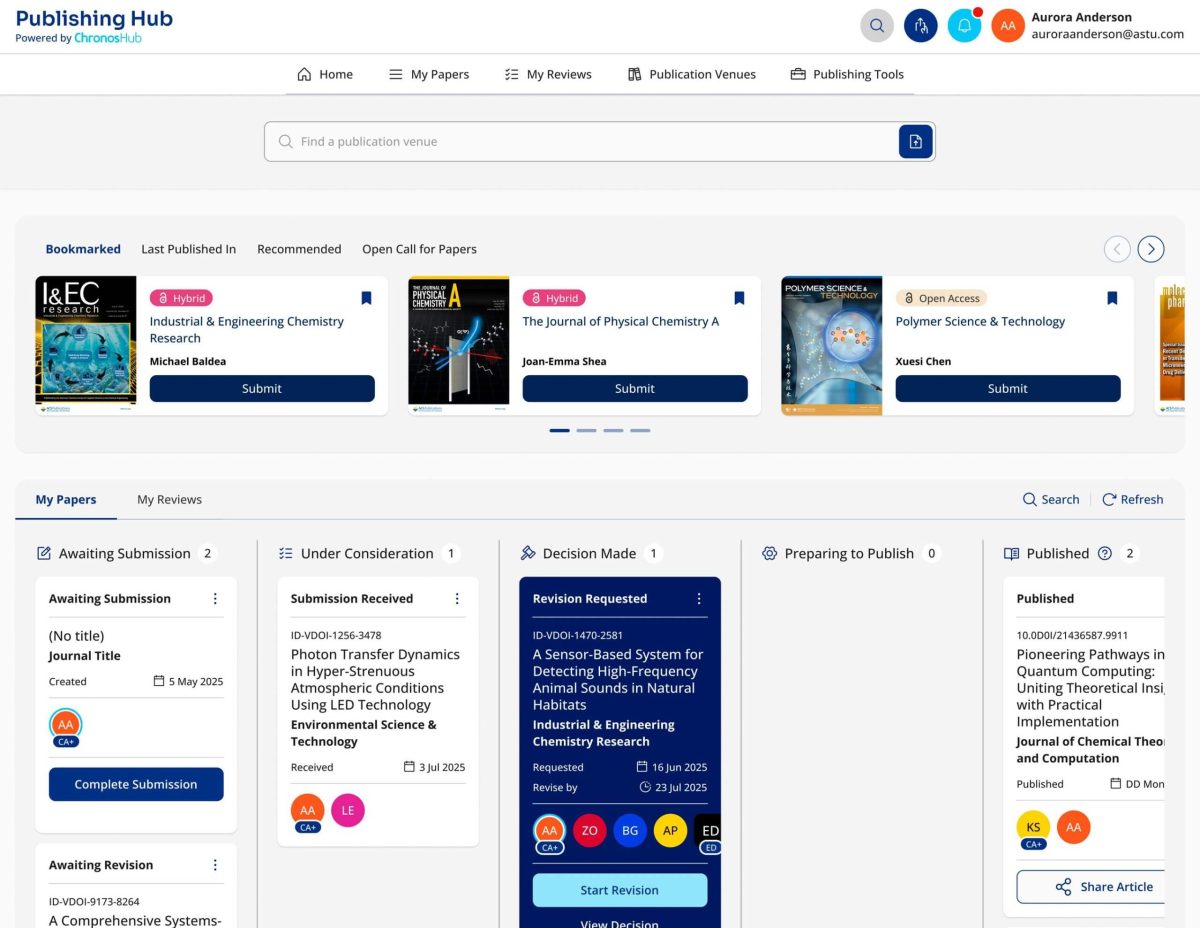
Working with ChronosHub and peer review partner EJP, ASM built a new submission layer that sits in front of peer review. The previous 38 questions were trimmed to six sections with five critical fields populated by ChronosHub’s AI pulling the answers directly from the manuscript where possible.
“What are the key things we need to make a really quick decision?” David says. “We limited our questions to six key bits of information, extracted from the manuscript. This allows us to maintain data integrity from submission into peer review.”
Rather than collecting the same information at every stage of the workflow, the data captured at submission now grows as it moves through production, finance, and delivery. Authors aren’t asked to provide it again.
A platform for what comes next
Submissions that once took 30 to 60 minutes now come in at around six. AI extraction of manuscript metadata is running at roughly 80 per cent accuracy. And the data flowing into ASM’s peer review system is cleaner and more consistent than before.
For David, the more interesting opportunity is what this unlocks going forward.
“Integrations are where the future of publishing is, not necessarily in unified systems,” he says. “ChronosHub has allowed us to be really clear about how we communicate, why we communicate, and how we’re integrating people into the workflow. It’s allowed us to think like that, where it was harder to do that in the past.”
For ASM, ChronosHub hasn’t just brought the torture index down. It’s changed how the team thinks about what comes next.
For publishers
Learn more about ChronosHub for publishers
ChronosHub takes a different approach to publishing workflows. Our flexible integration framework conencts trusted publishers systems with new tools and services, letting you automate time-consuming admin, catch errors early, and give your authors a seamless, branded experience that will make them want to submit again.