
Post-acceptance fault lines
As a general rule, geologists are more than happy to talk about “friction”. It’s a force that’s central to the study of fault mechanics and earthquakes. But when it comes to submitting their research papers, friction is not so welcome.
Helen Floyd Walker is Head of Publisher Operations at the GLS. She works with authors across the publishing journey, from commissioning through to final publication. She saw that legacy publishing no longer met the needs of today’s research communities, especially at post-acceptance, when authors have to sign licenses and investigate eligibility for APC waivers and discounts.
The society offers both open-access (OA) and hybrid journals, published online on their Lyell Collection. As GLS signed more read and publish agreements with publishers and grew in scale, these friction points were becoming unmanageable and posed a risk to GLS’s author-centric identity.
“Before we had our ChronosHub integration, imagine a very labor intensive, admin-heavy manual workflow,” explains Helen. “We were emailing authors back and forth; we were filling in spreadsheets. Everything took ages. Something had to change.”
Delivering a consistent author journey: Introducing a “magic link”
GSL attracts repeat authors and reviewers, many of whom are Fellows. So, finding a solution that prioritized the author experience and didn’t disrupt existing systems was vital.
“The understanding of the publishing landscape that the ChronosHub team offered, together with their agile approach to development, was key to our decision making.”
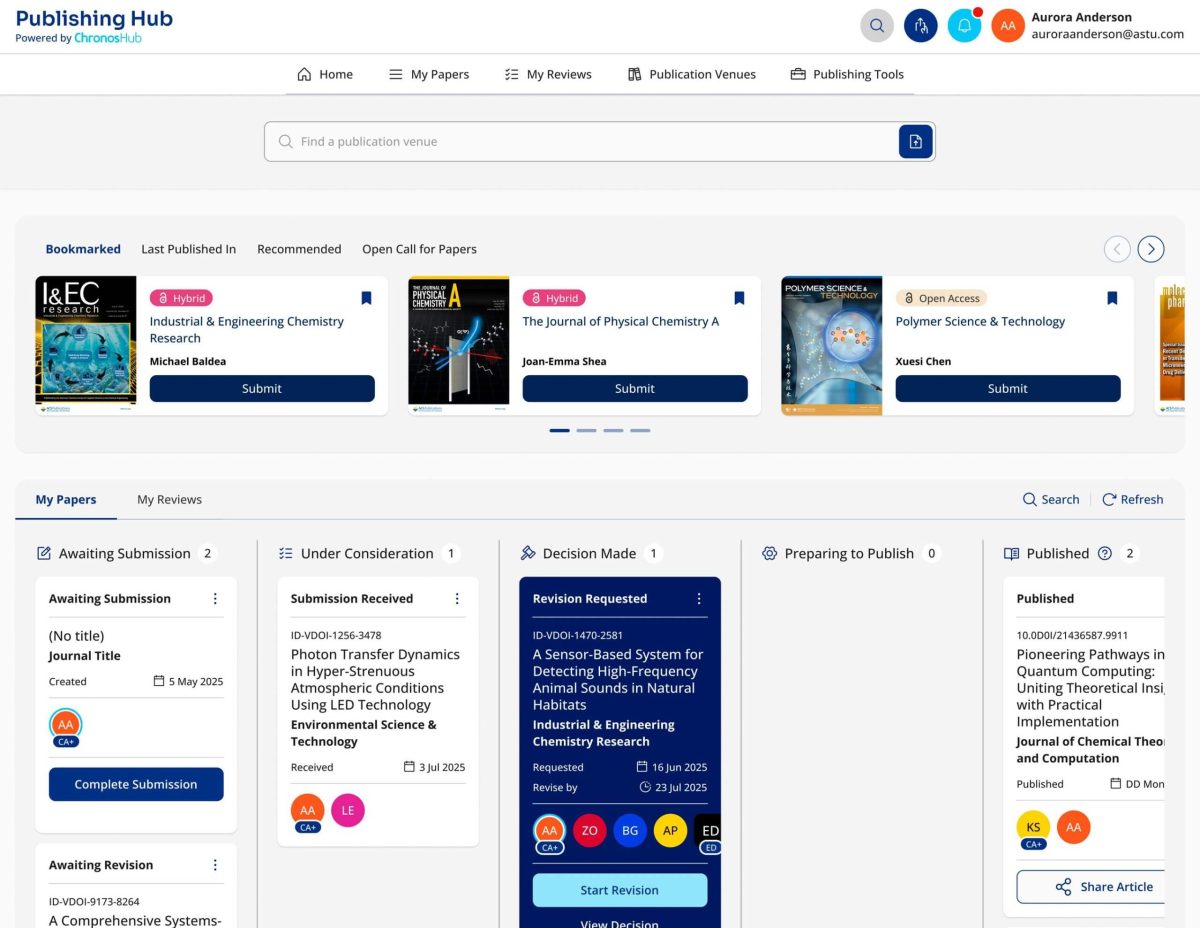
ChronosHub built a custom-branded environment for GLS’s post-acceptance workflows, flexibly integrating with their submission and peer review system, Editorial Manager, and allowing GLS to adopt the tools they need, where and when they need them. After acceptance, authors are now emailed a “magic” link into the environment to make their final publishing decision, sign their license (or delegate the signing to a third party) and pay processing charges.
“If they’re eligible for one of our institutional read and publish agreements, that’s automatically applied. Any other discounts are automatically applied, such as for our Fellows. The system is so much quicker and more efficient for everyone involved.”
An OA partner for the long term
For the society’s institutional partners, ChronosHub has also improved operational efficiency. Instead of needing to contact the society, they can see real-time reports in ChronosHub. These include an overview of all submissions from authors they’re affiliated with, helping teams reduce avoidable rework later in the process.
“This means that they can access the value of their agreement with us, and they can see what’s coming in from their authors.”
GLS’s open access journey continues to evolve. The partnership with ChronosHub has been an important milestone along the way, smoothing out the friction that was causing so much frustration.
“We’ve not looked back since converting away from our old manual workflows,” Helen says. “We are excited to see new developments roll out and to know we have a voice contributing to that future.”
For publishers
Learn more about ChronosHub for publishers
ChronosHub takes a different approach to publishing workflows. Our flexible integration framework connects trusted publisher systems with new tools and services, letting you automate time-consuming admin, catch errors early, and give your authors a seamless, branded experience that will make them want to submit again.