The research integrity paradox: more checks, less confidence
I love “Catch Me If You Can,” Spielberg’s twisty caper about con man Frank Abagnale. Played by Leonardo DiCaprio, Frank poses variously as an airline pilot, lawyer, and doctor to run his scams.
One of his greatest skills is forging documents. When he’s eventually caught, the FBI puts him to work spotting other forgeries.
Other than recommending a great movie, I bring this up in the context of research integrity, which is the topic of SSP’s latest Pulse Check. The results of the poll aren’t surprising on one front: everyone is worried about AI-generated manuscripts. But it also shows an industry that’s leaning heavily on AI to root out fraudulent research; our enemy has become our friend.
Plenty of people at the Bureau had their doubts about using a con man to catch other con men. And the Pulse Check shows the same is happening with AI.
The numbers at a glance
Some of the key figures that caught my eye:
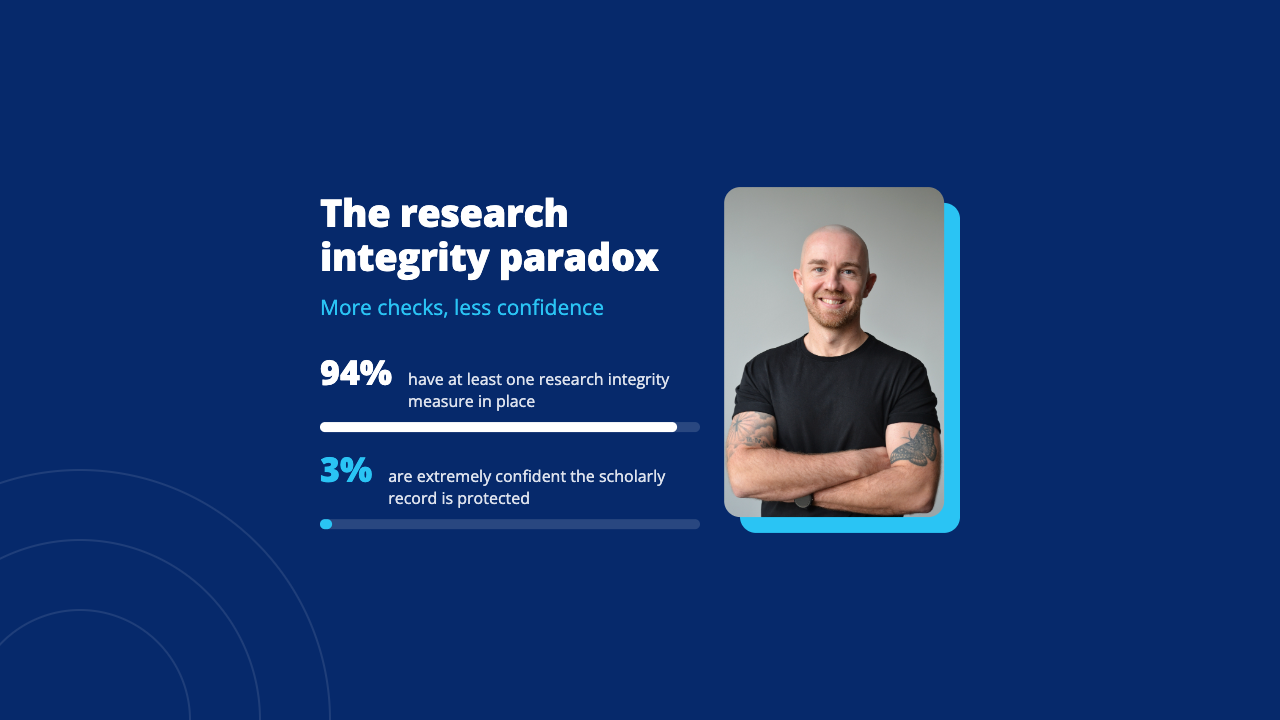
- 94% have implemented at least one research integrity measure. But only 3% are extremely confident that the scholarly record is being protected.
- More than half report using AI-powered screening tools. But fewer than half feel confident in actually spotting AI-generated or manipulated manuscripts.
Where’s this disparity coming from?
One obvious factor is doubt in the tools themselves. Ever since the AI boom began, plenty of studies have found AI detection tools wanting. Like this paper from 2023, which tested 14 screening tools and found that none of them hit 80% accuracy with any regularity.
But AI is improving at an incredible pace. More recent studies, including this one from Nature, conclude that the best tools on the market have made “great leaps forward,” rarely mistaking human writing for AI. As the authors point out, there are cheap and cheerful tools available that don’t perform as well, so judging these tools still needs to be done on a case-by-case basis.
Plagiarism is the exception
Worries abound in the Pulse Check report. But there’s one area which bucks the trend, and it tells us something important about how confidence is built.
More than half of the respondents were confident in catching plagiarism.
Partly this is due to the nature of the problem. To catch plagiarism, you need to match a new manuscript against an existing body of work. This is a relatively simple task for a system to perform, which explains why plagiarism tools have been around for ages. If you’ve submitted anything to a college or a publisher in the past 20 years, it’s been through something like Turnitin.
Plagiarism checks have become a trusted part of publishing’s integrity infrastructure, their value strengthened through publisher agreements and partnerships with bodies such as Crossref. iThenticate, Turnitin’s scholarly publishing product, can search through repositories of hundreds of millions of articles.
In comparison, AI tools still seem very much like add-ons. They’ve had little time to mature and there’s no underlying infrastructure for them to plug into. As a result, they feel disconnected from wider ecosystems.
With my partner hat on
How do we get confidence in AI tools up? I believe there are three things that can begin to instill the same confidence that we see with plagiarism tools today.
1. Focus on outcomes, not features
As the Nature article makes clear, the market for AI tools is crowded and varied in quality. Some deal with manipulated images, others citation fraud, author verification, AI-generated content, or data anomalies. Many claim to tackle several problems at once.
I usually warn publishers away from one-stop shops, because the more specialized systems tend to be driving innovations forward. All-in-one solutions lack their laser focus.
In order to evaluate an AI tool, a feature list is good for nothing. Instead, do this:
- Pre-implementation: Agree on what success looks like up front. Set those metrics in stone in your vendor agreements.
- Post-implementation: Keep it accountable. Every tool should earn its place, so don’t let it fade away into the background.
2. Made adoption easier
Specialization comes with a catch. Implementing one tool with existing submission or peer review systems can take six months of custom development (if not longer). So, implementing four or five tools appears to be a fool’s errand to many publishers.
That’s why we need to make it easy to test a tool, measure its impact, and replace it if it falls short. This is how confidence grows. That flexibility is at the heart of our approachhere at ChronosHub.
3. Share progress across the ecosystem
To me, the most striking data point in the Pulse Check is that only a third of organizations have external partnerships or shared initiatives. That number has to grow.
A paper mill doesn’t stop when one journal rejects its paper. It moves on to the next, and the next. Walled gardens can’t fix that. We need tools that can pass what they find beyond one vendor’s walls, and a wider ecosystem that supports common mechanisms for sharing signals across organizations.
Trust has to be earned
Things didn’t turn out so badly for Frank Abagnale. The movie’s closing titles tell us that he’s married, has kids, and is firm friends with the FBI agent who caught him. He’s also regarded as a world-leading expert on bank fraud and forgeries. Given his very deceptive past, trust like this had to be earned.
AI-powered integrity tools face a similar challenge. Plagiarism screening earned trust through years of proven results and shared infrastructure. AI tools are still earlier on that journey. Now we need to build the evidence, standards, and collaboration needed to make publishers confident in the results they produce.
Share this post