Why publishers are looking upstream, again
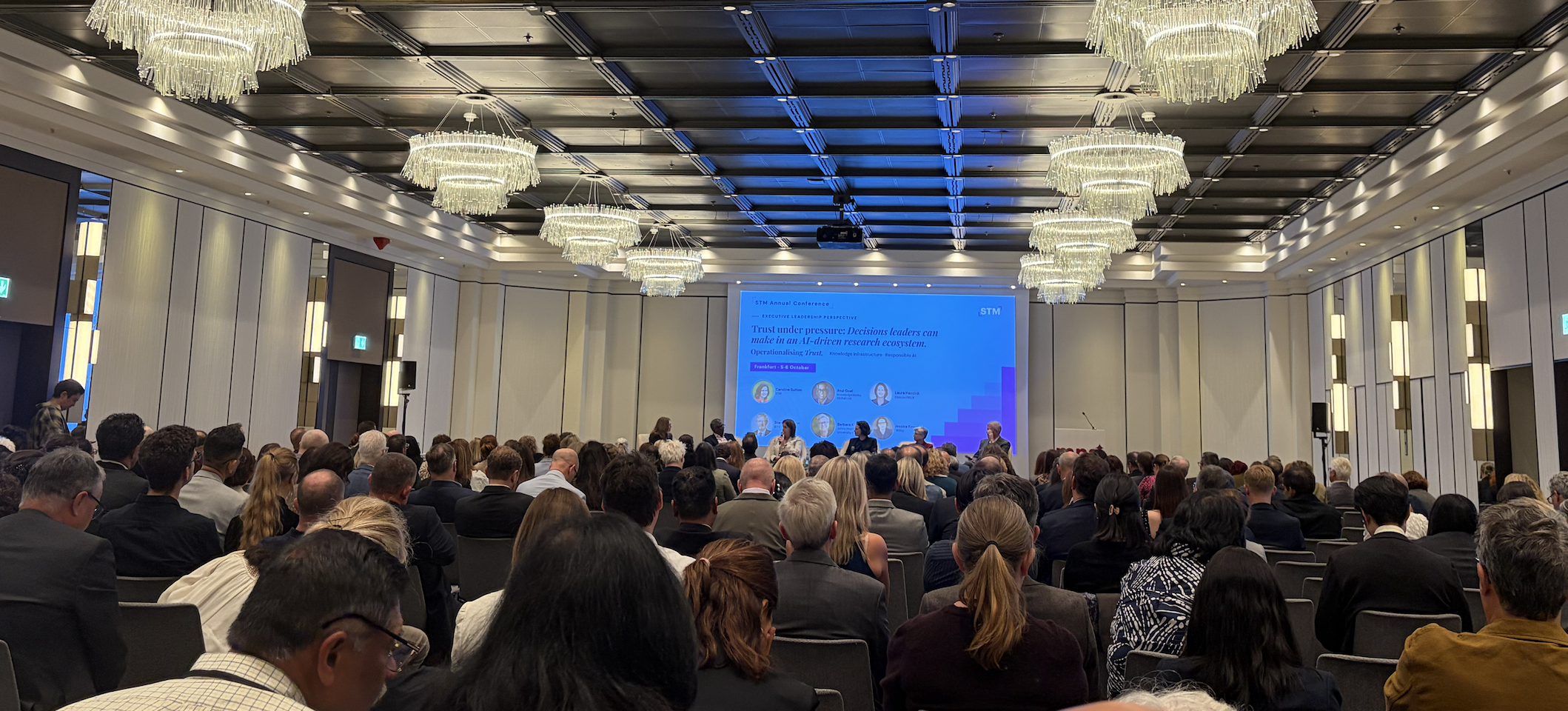
My conversations at STM in Frankfurt this year were variations on a theme: Publishing has run out of downstream efficiency.
We’ve seen decades of optimizing editorial processes. But in 2026, as submission numbers keep climbing, that approach has stopped delivering tangible gains. Now the industry is looking upstream.
It won’t be the first time. Joseph Esposito, whose name you’ll know from Clarke & Esposito’s The Brief, wrote about “upstreaming” eight years ago. Back then, he described publishers moving upstream in search of new revenue. Today, the reason to focus there is very different, because it’s where the cost of downstream human touches gets decided.
What’s changed since 2018
Four years before ChatGPT launched, the open internet was the industry disrupter. Readers were bypassing paywalls and accessing papers for free on sites like Sci-Hub.
With traditional sources of revenue under threat, publishers looked up the value chain, toward research and authorship. Elsevier bought SSRN. Wiley acquired Authorea. As Esposito put it, “everywhere you turn, you see workflow tools being gobbled up by major publishers.”
These kinds of acquisitions weren’t an option for society publishers. But today, they aren’t attractive to the majors either. That’s largely down to two factors.
- Open Access’s rapid growth. Since 2015, Gold OA’s total market share of published works has increased by 27%. By contrast, the share of subscription-only has fallen by 16%. With more money captured at acceptance rather than access, Sci-Hub and its ilk don’t pose the same threat. At the same time, every rejected manuscript costs money to process, with no APC to show for it.
- The AI-assisted surge. Across the industry, we’re seeing publishers experience 30-40% growth in submissions. Paper mills are one driver. And as my colleague Chuck wrote, legitimate researchers are also producing more with the help of LLMs. This is creating a huge strain on editorial capacity, which is where publishers are now focusing attention.
Downstream has been squeezed dry
What to do about this tidal wave of research? In Frankfurt, the consensus was clear. Downstream isn’t the place to tackle it.
Most publishers today employ checks post-submission, including those designed to flag AI manipulations. In many cases, this increases the workload for staff.
As Maria Kowalczuk from Frontiers said on a panel, every flag needs someone to verify it. We heard this on our webinar last month too; one publisher’s integrity team had grown from “half a person” to seven full-time employees.
Beyond fraudulent content, there are also basic, avoidable errors: out-of-scope manuscripts, poor grammar, and mismatched funder information.
Ten years ago, dealing with these may have been manageable. But given the scale of submission numbers, teams are getting swamped and have less time to evaluate novelty and rigor.
Where checks and automations belong
Publishers at STM agreed that automations still had an important role to play. But they need to be placed earlier on, somewhere between the author’s hands and the editor’s desk.
Kim Eggleton from IOP explained how she sees the process working better: authors doing scope matching and receiving basic verifications in the system before they submit. If, for example, the author count on the manuscript doesn’t match what’s in the system, authors shouldn’t be able to submit it. That’s a binary rule.
True, this moves more workload to the author. But one publisher’s internal research found that authors don’t mind. They’re happy to use tools before and during submission if it means less back-and-forth with the editorial team later.
How to upstream in 2026
Are publishers actually in a position to “upstream”? Because in the big shift from print to digital, the steps before peer review got split between a variety of tools and vendors.
Journal discovery, manuscript checks, and submissions often happen in different systems. Publishers have little control over those experiences, and even small improvements can end up languishing on a vendor roadmap.
At Frankfurt, the people I spoke to weren’t interested in migrating away though. These existing systems are too ingrained in operations. But they do want more influence over a manuscript earlier on.
Which is why ChronosHub Runway generated so much interest. It works alongside the systems publishers already have and puts them in control from journal discovery to first editorial decision. They can apply their business rules, workflows, and tools during pre-submission and submission, where quality issues are cheapest to fix.
One question to take away
One STM panel opened with a simple point. The bottleneck in scholarly publishing isn’t producing content anymore. It’s how much humans can verify.
Esposito was right that value would ultimately move upstream, but the reason has changed. Every problem an author fixes before submitting is one less that someone needs to spend time on later.
So, here’s a question to take back to your team: What has a manuscript already cost you by the time it reaches an editor’s desk?
Share this post